Reflections on our Peggy Angus Conversation ~ by Beatrice Uprichard.
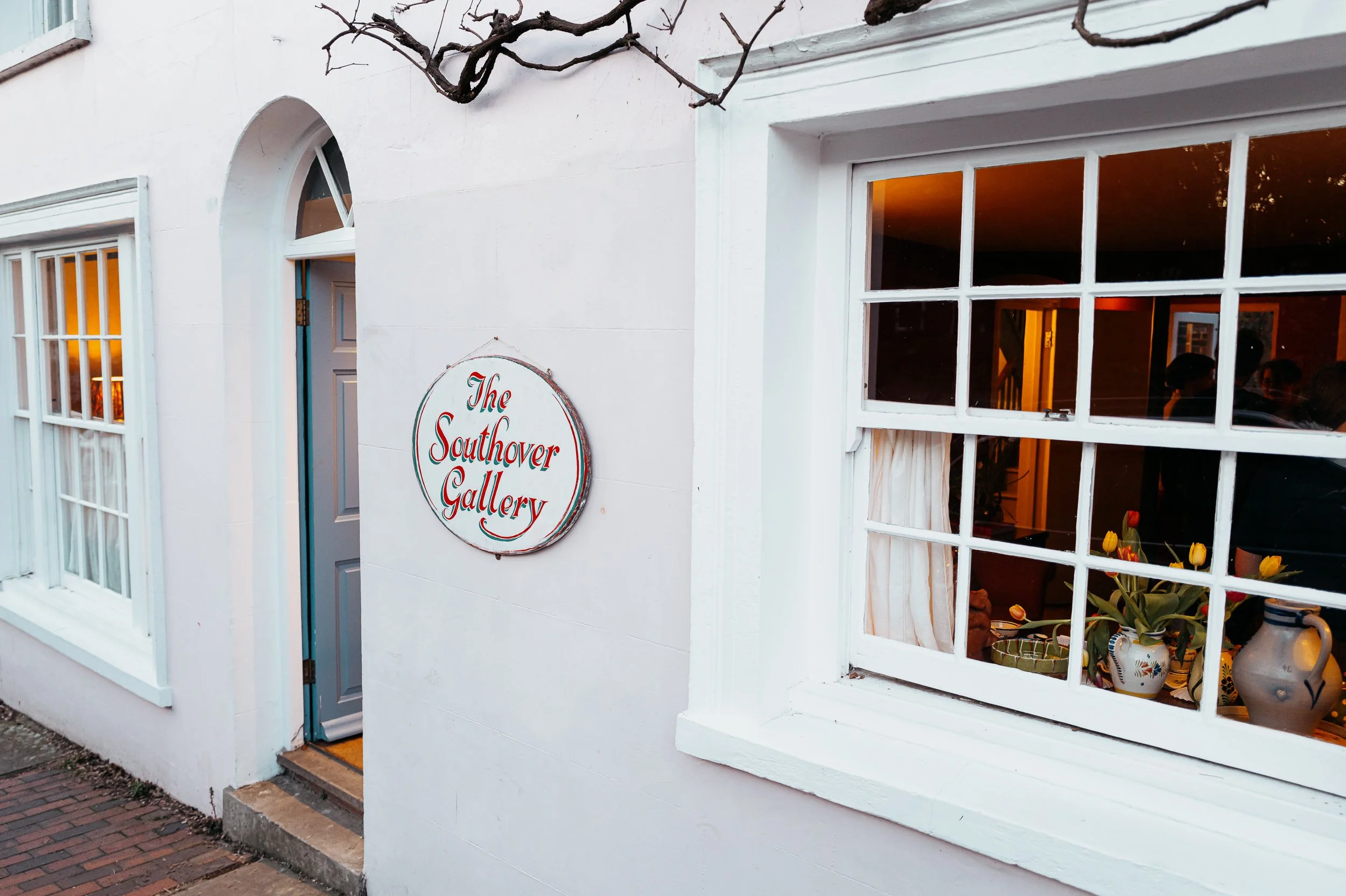
Guests were welcomed to a Wintery Southover Gallery with a newly restored 1973 sign.
Held at Southover Gallery in Lewes, run by Deidre Bland in the 1970s and resurrected by Charlie and Matt, a powerful bright red panel of Peggy Angus wallpaper in the living room made this the perfect space to invite Carolyn Trant, Tanya Harrod, Diana Hall and Sarah Lawrence to share their experiences and insights on Peggy.
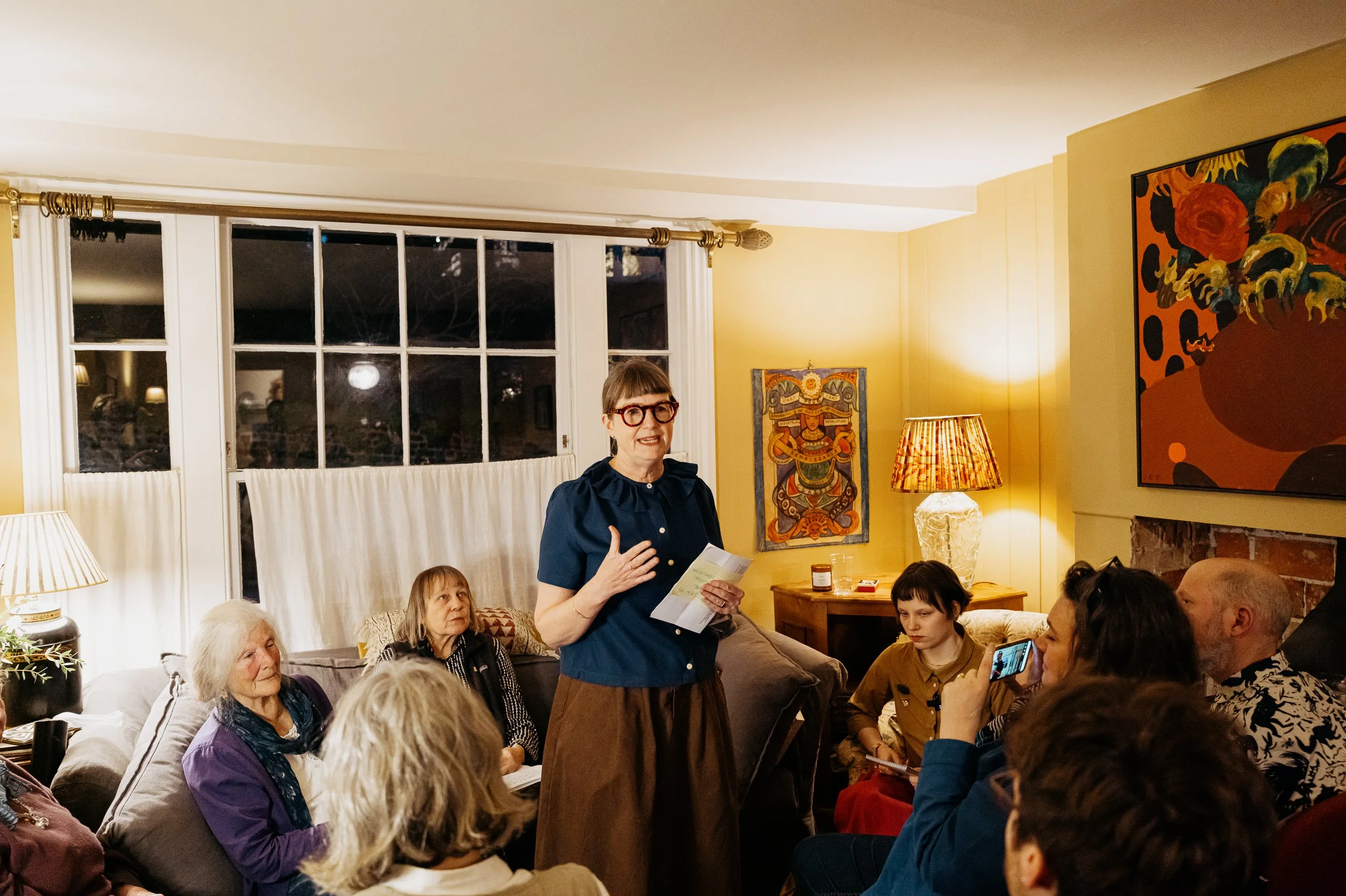
Introduction to the panel discussion by Lewes artist, Emma Carlow.
Nowadays, with so much of Peggy’s growing fan base being too young to have known her, she is more of a myth or a legend in Sussex than a person. Having written my dissertation about her and Ethel Mairet, I used her often to demonstrate points that in retrospect I don’t think she meant to make, about feminism and bureaucracy for example. Whilst Carolyn had her work cut out for her reminding me of the facts, isn’t it amazing that despite never having known Peggy she ignites my imagination so much, and embodies so many ideas about life and art that still resonate today. Her story feels somewhat magical already, from Diana pulling over in the middle of nowhere in Cumbria for a walk, only for Peggy to notice this was the exact house she lived in during the war, to Peggy receiving both a bill for a large sum of money and a letter detailing some income from a premium bond at the exact same amount,in the same post. Her life was seemingly ‘rich with fruitful coincidence’, as described by Carolyn Trant in her wonderful book ‘Art for Life’, which sometimes reads more as a pragmatic fairytale than a biography. I think the timelessness of Peggy’s ideas is reflected in the strength and resonance of her legacy, which will continue to mature into a myth as my generation has Peggy embody ideas which are close to our hearts, and reflect on our times.

Contributors Sarah Lawrence, Diana Hall, Tanya Harrod and Carolyn Trant with Chair, Beatrice Uprichard.
The significance of organising the event to coincide with International Women’s Day is twofold - the liberating effect Peggy had on women around her thanks to her unconventionality, and her less widely remembered legacy compared with her contemporaries, in part as a result of sexism. Peggy is remembered as a great creative empowerer of others, but I’d like to highlight the effect she seems to have had on other women in her life - she was bold, playful, assertive, and as Carolyn points out, just outrageous! Carolyn says it felt like permission to be free and outrageous too, and whilst Peggy might not have called herself a feminist, she lived as an example of feminist ideas simply through doing whatever she wanted. She travelled by herself, often going off the beaten track in search of rural craft work, either unaware of the dangers of being a solo female traveller, or simply unafraid. My impression is that she was very sure of herself, and had enough faith in people that she trusted she could find friends anywhere, which she inevitably did.
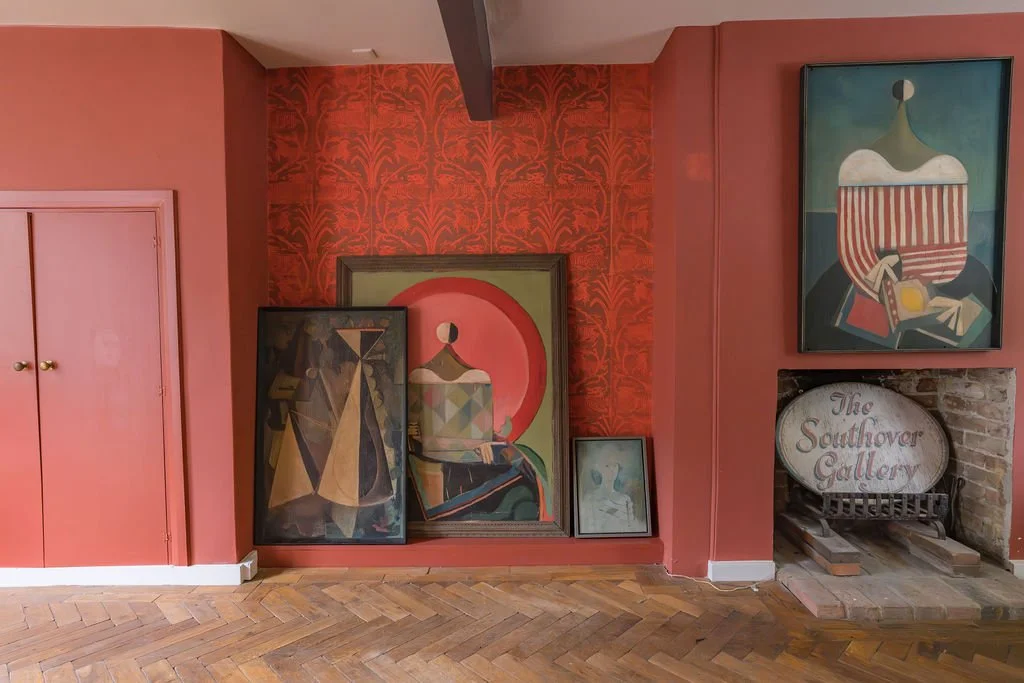
The Peggy Angus “Welsh Dragon” wallpaper that helped reignite The Southover Gallery in 2024.
I see her lack of recognition today as a result, in part, of sexism, however Carolyn also note that she didn’t ‘play the game’, staying out of institutions (occasionally because they didn’t admit women at the time) and preferring to make her own world. It appalls me that despite Eric Ravilious being indebted to Peggy’s world as a source of inspiration, Peggy is remembered more widely simply as his friend than she is in her own right. Finally Peggy is getting some long overdue attention, and essentially not just as a quirky caricature (it is tempting to focus excessively on her interesting personality) but as an important artist and thinker of her time, with (to quote Tanya) ‘a fresh and sylvan gift for flat pattern’ not unlike that of William Morris.
Tanya explains ‘she had an extraordinary gift for light and dark, and the actual way you put together pattern’ and ‘a wonderful neo-romanticism’; she certainly had a gift for good design, and didn’t limit herself to simplified, modernist patterns as were so popular, preferring the pragmatism and courtesy towards the past of romantic modernism. Diana remembers
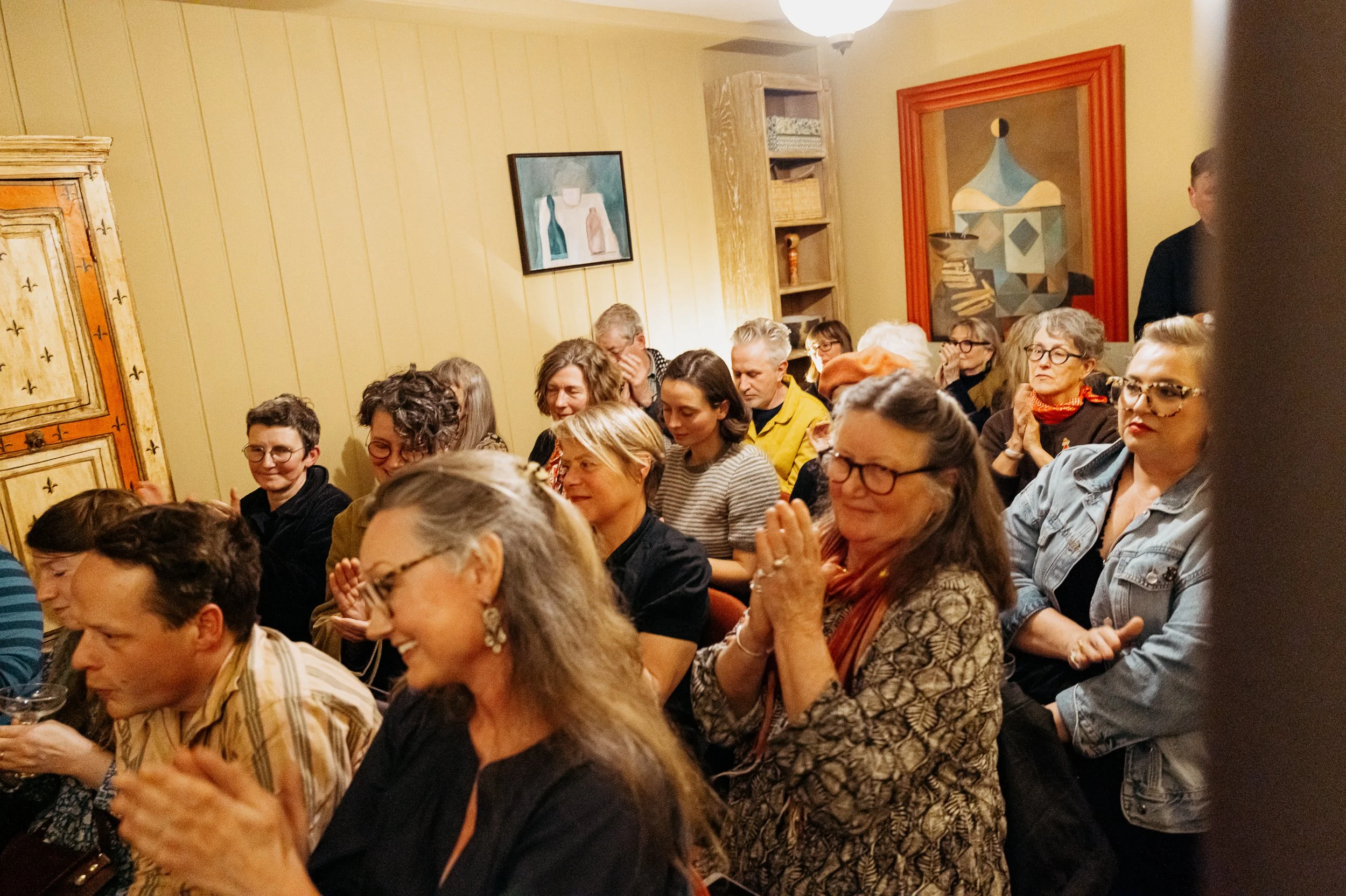
Some 50 guests were squeezed in and seated on chairs borrowed from Southover Church.
Peggy’s wallpaper design for a vineyard which had to include grapes - Peggy’s design had birds eating the grapes and was of course rejected, but reflects Peggy’s wonderful playfulrealism. Whilst the final result could be very unserious, I think she saw artworks more as ‘work’ than ‘art’, thus approaching design accordingly - thoroughly and industriously.
Sarah, who was employed by Peggy to print her wallpaper, recalls Peggy often saying ‘that won’t make the baby a new bonnet’ in order to push forward with work, not minding so much about the quality of the work, just as long as you were keeping busy. Good advice for any designer I think, such a diligent approach to work can release the ego from being too central in the. process.
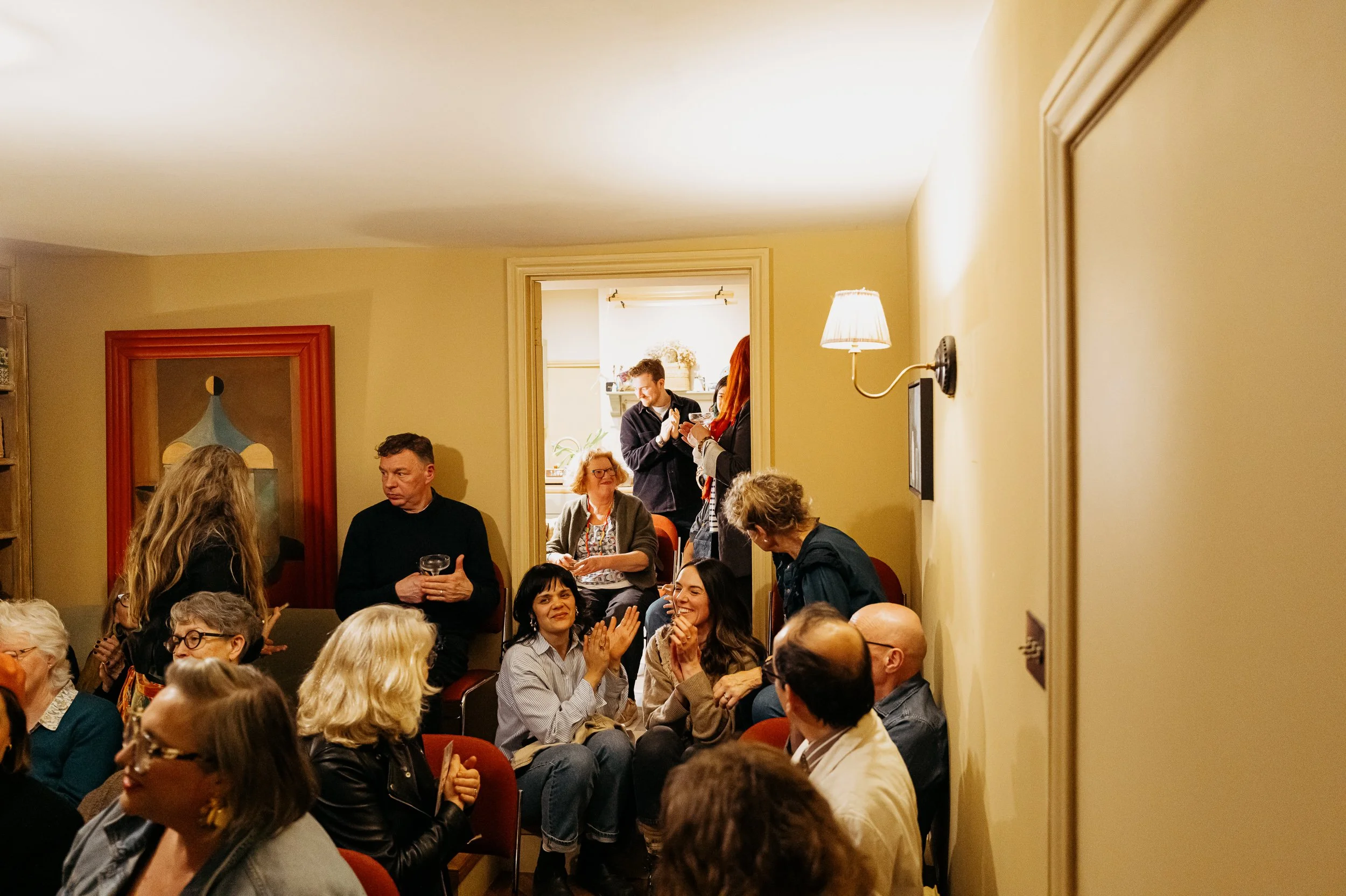
Guests spilled all the way back to the kitchen.
But Peggy’s influence reaches far beyond her own artworks. Both Diana, who was encouraged and sponsored by Peggy to begin a career in hand-printed ceramic tiles, and Carolyn, who (lucky thing!) was Peggy’s student at the North London Collegiate School, attribute the abundance of creativity in their lives to Peggy’s influence. She changed their lives. It seems it came so naturally to her to enable others to be creative, maybe it’s because her creative spirit was so abundant that she couldn’t help but share it. She insisted that everyone had something artistic to say, and in doing so, as Diana explains, ‘the world was opened’ to her.
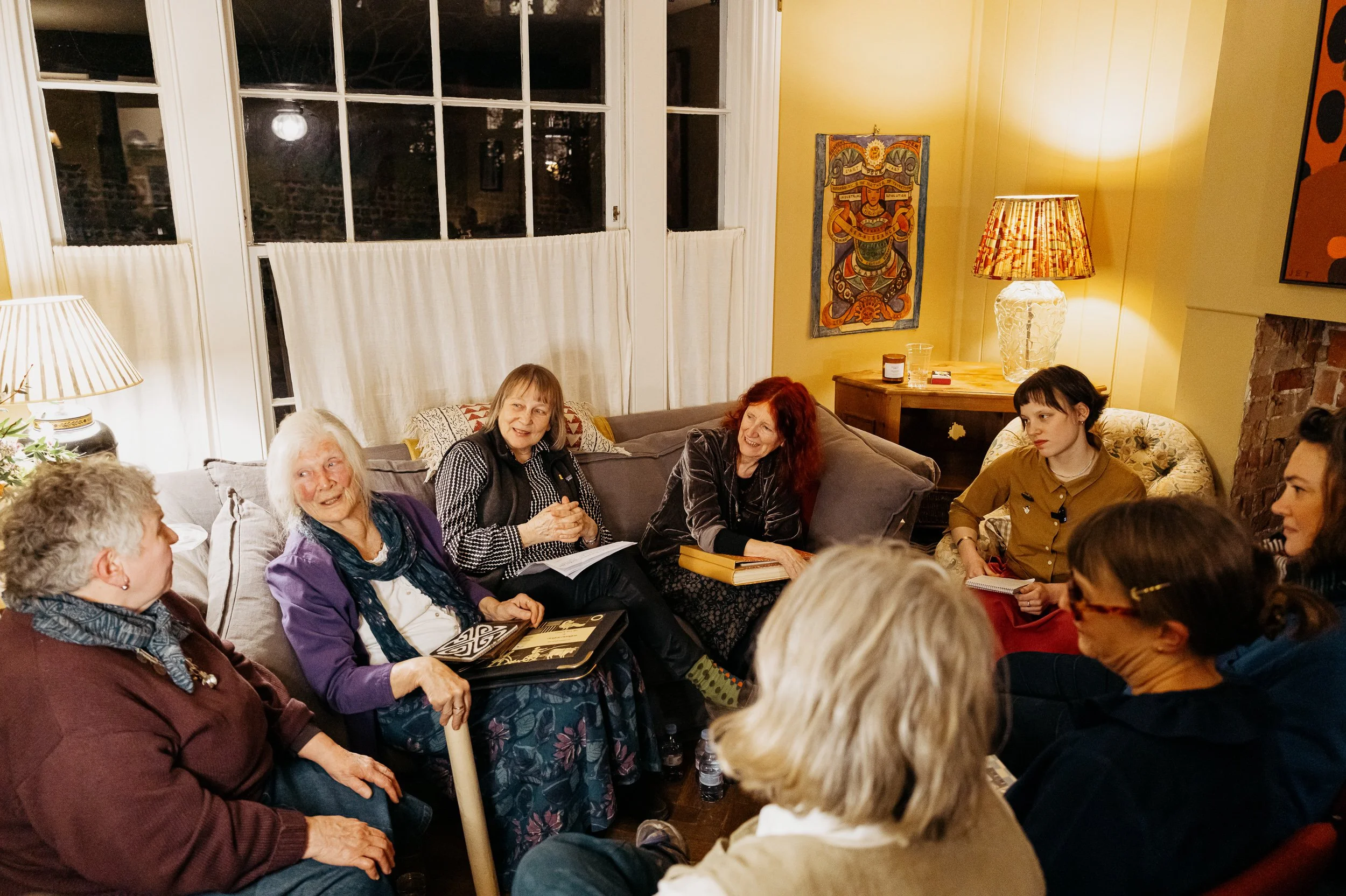
Diana Hall showing examples of work from her time collaborating with Peggy.
Peggy revelled in collaboration and sharing, and I think she got just as much out of teaching her curriculum as her students did. Rather than seeing success as an individual pursuit, Diana points out that Peggy found something to be successful if everyone could join in. Art is not essentially institutional and qualification-centric, but is something we can all teach eachother informally and work together on. I think in an increasingly self-curational and bureaucratic arts landscape, this idea resonates even more today than perhaps it did then.
As usual Peggy was way ahead of her time.
The Southover Gallery would like to thank Beatrice Uprichard for generously sharing her thoughts with us for our journal. Bea, you were the most brilliant Chair! We would also like to thank our panel contributors, Sarah Lawrence, Diana Hall, Tanya Harrod and Carolyn Trant aswell as Emma, Graham and Finn Carlow. The event was also brought to life thanks to the support of ROSA Magazine, Winklestone Vineyard and Loam Kitchen.
All images credited ~ Finn Carlow